February 01, 2008

Recipe: Penang Assam Laksa (Nyonya Hot and Sour Noodles in Fish Soup)

Penang Assam Laksa(Click the above to view all pictures. Best viewed with Internet Explorer 7.)
Before I start writing this post, I have a confession to make. I have an Asian (Chinese/Malaysian) mouth. In my gastronomic dictionary, it simply means that I can't live without rice and noodles, soy sauce, sambal belacan, spicy and pungent food--the foods of my Chinese-Malaysian root.

Just this past week, I had a massive Asian mouth attack. Granted, I savored some of the best French foods--foie gras, cheese, mussels, seafood, duck, terrine, and the list goes on. However, three days into eating meals after meals of immaculate French food, I got bored of it...it's too heavy and luxurious for my cheap taste. No offense to French cuisine connoisseur, I wanted something without cream or butter or sauces or excessive details; I wanted something simple and straightforward such as my Asian rice and noodle dishes--Hokkien mee, fried rice noodles, steamed rice rolls, char kway teow, chicken rice, and especially Penang Assam Laksa.

Penang Assam LaksaOn the flight back home, I knew that I had to make Penang Assam Laksa to cure my Asian mouth disease and fix my craving. So, I went to the market and assembled the long list of ingredients and made myself a small pot of Penang Assam Laksa, or Nyonya noodles in spicy and tangy fish broth/soup...

A staple--and arguably the most famous--hawker food in Penang, Penang Assam Laksa is very addictive due to the spicy and sour taste of the fish broth. Tamarind is used generously in the soup base and hence the word Assam (means tamarind in Malay). In addition to tamarind, assam keping or peeled tamarind is also commonly added to give it extra tartness. Another secret ingredient is Polygonum leaf (marketed as Vietnamese mint leaf in the United States) or daun kesom/daun laksa. While the best Assam Laksa broth is infused with the aromatic ginger flower (bunga kantan), I made without it because I couldn't find this special ingredient in the market. Of course, no Assam Laksa is complete without belacan and dollops of heh ko/prawn paste (the dark paste on the spoon).

Polygonum Leaves/Vietnamese Mint Leaves (Daum Kesom/Daun Laksa)Anyway, my Penang Assam Laksa was spot on--hot, spicy, sour, pungent, and full of flavors. It was very delicious and as good as the ones served by hawkers in Penang. At the first taste of this Penang Assam Laksa, I felt like being home. For now, I declare my my Asian mouth syndrome sorted...*wink*

Other "rice & noodles" recipes on Rasa Malaysia:
  1. Penang Char Hor Fun (炒河粉)
  2. Penang Hokkien Mee (Prawn Mee / Har Meen / Mee Yoke / 福建虾面)
  3. Claypot Chicken Rice (without Claypot)
  4. Penang Chee Cheong Fun/Steamed Rice Rolls
  5. Kerabu Bee Hoon
  6. Indian Mee Goreng/Indian Fried Noodles
  7. Fried Vermicelli Xiamen Style
  8. Indonesian-style Soto Ayam/Chicken Noodle Soup
Recipe: Rasa Malaysia Penang Assam Laksa

Ingredients:

1 lb Mackerel fish
8 cups water
5 pieces assam keping (peeled tamarind)
1 pack dried laksa noodles

Spice Paste:

12 dried red chilies (de-seeded)
5 fresh red chilies (de-seeded)
8 small shallots
2 teaspoons belacan
1 stalk lemon grass (use only the white part, about 6 inches)

Tamarind Juice:

Tamarind (about golf ball size)
1/2 cup water (repeat 3-4 times)

Seasonings:

1 teaspoon salt
2 tablespoons sugar
1 teaspoon fish sauce

Garnishing:

1 cucumber (julienned)
1 bunch mint leaves (use only the leaves)
1 bunch polygonum leaves/Vietnamese mint leaves (daun kesom/daun laksa)
1 bungan kantan (cut into small pieces)
1 red onion (sliced thinly)
1 lettuce (thinly cut)
1 red chili/3-4 bird's eye chilies (cut into small slices)
1 small pineapple (cut into short strips)

Condiment:

Heh Ko/Prawn Paste

Method:

Clean the fish, remove scales and guts. In a pot, bring 8 cups of water to boil. Add in the fish and boil for about 10 minutes. Transfer the cooked fish out into a bowl and let cool. Strain the fish stock, then add in the peeled tamarind, and the polygonum leaves and continue to boil in low heat.

Wet your hands constantly with a bowl of water, pick the flesh out of all the fish and discard the bones. Break the fish meat into tiny pieces and put the fish back into the stock, cover the lid, and lower the heat.

Using a mini food processor, grind the spice paste until fine. Heat up a wok and saute the spice paste with cooking oil for about 6-8 minutes or until it smells aromatic and spicy. Transfer the spice paste into the boiling stock.

Extract the tamarind juice and add it into the stock. Strain the tamarind juice and keep the seed. Repeat it 3-4 times with 1/2 cup of water each time to make sure you extract all the essence from the tamarind. Continue to taste your Assam Laksa stock to make sure it's sour and to your liking. For seasoning, add sugar, salt, and fish sauce.

Prepare the laksa noodles by following the packaging instructions. In a serving bowl, add in the laksa noodles and garnish all vegetables on top. Pour the Assam Laksa soup into the bowl and serve immediately with a spoonful of Heh Ko/prawn paste.

Cook's Notes:
  1. For the best laksa noodles, please use Mount Elephant brand "Guilin Rice Vermicelli" (象山牌桂林濑粉) found at Asian/Vietnamese stores. (In Vietnamese, it's called Bun Bo Hue Guilin.) It's very smooth and exactly like the laksa noodles back home. If you are lucky, you might even find the fresh ones.
  2. For a good alternative, try LaiFen Rice Stick/中山濑粉 from Guangdong, China.
  3. Fresh rice noodles or laifen/濑粉 are available in Asian grocery stores, but I don't like the texture: they are a tad too thick and not smooth enough.
  4. Canned sardines DO NOT make good Penang Assam Laksa. They make the soup base fishy and unappetizing. There is no shortcut to making great Assam Laksa, you just have to find certain freshest fish and make it from scratch.
P.S.: I heard that New York-based Chef Pelaccio of Fatty Crab fame claimed Assam Laksa to be the ultimate Malaysian dish. Personally, I think this Malaysian Assam Laksa fish soup tastes much better than French Soupe de Poisson (fish soup). *wink*

Labels: , ,


Continue Reading "Recipe: Penang Assam Laksa (Nyonya Hot and Sour Noodles in Fish Soup)"


May 03, 2007

Nyonya Recipe: Stir-fried Pork with Cincaluk (Heh Ya Kay Char Bak)

Stir-fried Pork with Cincaluk (Heh Ya Kay Char Bak)A few months ago, I introduced cincaluk (preserved shrimp) to the world my readers with a special Nyonya dish "steamed eggs with cincaluk." Today, I am giving you the second installment of this unique ingredient with stir-fried pork with cincaluk. Known in Hokkien dialect as Heh Ya Kay Char Bak, this Nyonya creation graced my family's dining table very often when I was growing up.

Stir-fried Pork with Cincaluk (Heh Ya Kay Char Bak)While cincaluk is not everyone's cup of tea, for those who love it, it lends a very distinct and exotic flavor to the main ingredient, in this case, pork. The generous use of green bell peppers, red chiles, cincaluk, fried shallots and garlic add great colors and infuse the pork with droolsome aroma and pungent taste. This is what the Chinese call 色香味, meaning color, aroma, and taste...

Stir-fried Pork with Cincaluk (Heh Ya Kay Char Bak)Cincaluk is unique, versatile, and loaded with powerful (aka stinky) and complex flavors...are you up for it?

Related Recipe: Steamed Eggs with Cincaluk

Recipe: Stir-fried Pork with Cincaluk (Heh Ya Kay Char Bak)
Adapted from Nonya Flavours: A Complete Guide to Penang Straits Chinese Cuisine

Ingredients:

2-3 tbsp oil
3 shallots (thinly sliced)
3 cloves garlic (thinly sliced)
1/2 lb pork fillet (cut into small pieces)
4 teaspoons cincaluk
1 tablespoon tamarind juice
1 tablespoon sugar
Salt to taste
1 red chili (deseeded and cut into small pieces)
1/2 bell pepper/1 green chili (deseeded and cut into small pieces)

Method:
  1. Heat up the oil in a wok over medium heat to fry the shallots until they turn golden brown and crispy. Dish out and set aside.
  2. In the remaining oil, fry the garlic slices until fragrant and just lightly browned. Remove half of the garlic and set aside before adding the cincaluk.
  3. Saute the cincaluk until fragrant before adding red chiles and bell peppers.
  4. As soon as you smell the aromas of the chiles and peppers, add in the meat. Stir-fry for 30 seconds and add the tamarind juice, sugar, and salt to taste.
  5. Continue to stir fry the pork until it's cooked; dish out onto a serving plate.
  6. Top the stir-fried pork with cincaluk with shallot crisps and fried garlic slices.

Labels: , ,


Continue Reading "Nyonya Recipe: Stir-fried Pork with Cincaluk (Heh Ya Kay Char Bak)"


April 14, 2007

Recipe: Malaysian Sweet and Sour Eggs (Eggs Masak Branda/Belanda)

Sweet and Sour EggsAfter my brief but intense love affair with Japanese food, I am ready to get back to my culinary root. I miss my savory, fiery, rich, sweet, sour, salty, and pungent Malaysian food. As much as I love other cuisines and am constantly infatuated with various exotic dishes from other countries, I am not about to ditch the color and taste of Malaysian food anytime soon. Fret not, I am back and will be serving up even more Malaysian delights.

I made this dish but I am not sure what to call it. My mother and aunt call this "masak berana" which is supposedly a type of Nyonya cooking style with tamarind juice and onions as the two main ingredients. However, "berana" doesn't make much sense to me literally but I have no way to prove it. The other challenge to verify the real name is that--other than my parents' and my aunt's home--I haven't seen this egg dish elsewhere, except at Cafe Sambal (a very popular Malaysian restaurant) in Beijing. If you do make this at home and know its name, please drop me a comment and let me know. (The real name of this cooking style is called "Masak Branda/Belanda." Pixen - Thanks for leaving me a comment; mystery solved and I am forever thankful.)

Sweet and Sour EggsThis is easily one of my favorite egg recipes. A few eggs drenched in the ever-appetizing sweet and sour sauce served with steamed white rice plus dollops of sambal belacan (a Malay style sambal with roasted shrimp paste), I am in food heaven...

Recipe: Malaysian Sweet and Sour Eggs (Eggs Masak Branda/Belanda), courtesy of my mother

Ingredients:

4-5 eggs (fried "well done")
1 onion (cut into rings and then cut into half)
1/2 red chili (sliced thinly)
1/2 stalk scallion (sliced diagonally)
1/8 teaspoon salt
1/8 teaspoon fish sauce (optional; if you don't use fish sauce, add extra salt)
3 1/2 tablespoons sugar or to taste
3 tablespoons cooking oil
Tamarind pulp (the size of a small ping pong ball)
1 cup water

Method:
  1. Fry the eggs "well done" and set aside.
  2. In a small bowl, add one cup of water to the tamarind pulp and soak for 10 minutes. Squeeze the tamarind pulp to extract the juice. Use only the juice and discard the pulp.
  3. Heat up your wok and add in the cooking oil.
  4. Sauté the onions for 2-3 minutes until they turn slighly brown or aromatic.
  5. Add in the fried eggs and do a quick stir.
  6. Lower the heat, add the tamarind juice and bring it to boil.
  7. Add in sugar, salt, fish sauce, scallion and chili. Simmer for 1-2 minutes.
  8. Serve hot.
Cook's notes:
  1. It's not easy to get the perfect sweet and sour flavor so you have to taste the sauce a few times in order to get that perfect balance. This dish is supposed to be both sweet and sour, and a little salty. When I made this in Penang, I used less sugar because the sugar in Malaysia is a lot sweeter/stronger than in the US. So, please let your taste bud guide you during the cooking process. If it's not sour enough, extract more juice from the tamarind pulp. If it's too sour, add more sugar and some water.
  2. My mother also makes masak branda with salted fish. I will have to share the recipe one day.

Labels: ,


Continue Reading "Recipe: Malaysian Sweet and Sour Eggs (Eggs Masak Branda/Belanda)"


March 13, 2007

Recipe: Perut Ikan (Nyonya Pickled Fish Stomach Curry)

Perut Ikan / Nyonya Fermented Fish Stomach CurryPerut ikan—literally means fish stomach—is a signature Nyonya specialty that I love very much. The thought of it often sets my stomach rumbling and mouth watering. As unappetizing as it sounds and perhaps a tad weird to many, Perut ikan is a curry-like dish of various vegetables, aromatic herbs, and fermented fish stomach in the bath of rich, savory, sweet, sour, and spicy goodness. My pictures do no justice to this wonderful dish.

During my recent trip home to Penang, I learned the preparation of perut ikan and other Nyonya delicacies from my aunt. (My aunt's perut ikan is the best; you just can't get the same quality at Nyonya restaurants.) For once, I was the chef in her kitchen, cooking up a storm while she patiently narrated the step-by-step of making Nyonya dishes.

Perut Ikan / Nyonya Fermented Fish Stomach Curry - Saute the spice paste and add in pineapples, green beans, and eggplantsTumis (sauté) your spice paste until fragrant and add in the fermented fish stomach. This is a very important step as it rids the fishy smell from the fish stomach…that’s why coriander seeds are a must in the spice paste, without them, it’s not perut ikan…”

“Ok ok…”

“Now, add in some water and bring it to boil before you toss in the pineapples, green beans, and eggplants…”

“What about these daun kaduk (leaves) and aromatic leaves, can I add them in now?”

Perut Ikan / Nyonya Fermented Fish Stomach Curry - Add in coconut milk and all the aromatic leaves“No. You have to wait. You need to imbue the curry with the sourness of the pineapples first. Add those aromatic leaves towards the end or they will turn too mushy. It’s about balancing the taste and the texture of the ingredients…and don’t forget the santan (coconut milk).”

I was enlightened and nodded my head in agreement.

And so I listened carefully. I memorized. I learned.

Nyonya cooking is not to be taken lightly; a misstep in the cooking process or mishandling of the ingredients will render the dish unsuccessful.

Perut Ikan / Nyonya Fermented Fish Stomach CurryNo longer was I the child standing beside my aunt who watched curiously as she was cooking her dishes. Over the years, my aunt has aged physically but her skills in making Nyonya food has only gotten better. And now, I must be taught and become skilled at all these nostalgic foods of my childhood...

Excerpt from Wikipedia:

Nyonya food is the food of Peranakan people of Malaysia and Singapore. It uses mainly Chinese ingredients but blends them with Southeast Asian spices such as coconut milk, lemon grass, turmeric, screwpine leaves, chillies and sambal. It can be considered as a blend of Chinese and Malay cooking.

Recipe: Perut Ikan (Nyonya Preserved Fish Stomach with Herbs and Vegetables Curry)

Ingredients:

Spice paste
1 stalk lemongrass
6 shallots
8 dried red chilies
3 slices of galangal
1 inch of turmeric
1 tablespoon of roasted belacan
3 tablespoons of coriander seeds

6 pieces of fermented fish stomach
10 green beans (cut into 2 inches length)
1 egg plant (cut into small wedges)
1 small ripe pineapple (cut into 2 inches sticks)
1/2 lb small shrimp
5 chilies (slit and cut into 2 inches length)
1 ginger flower (sliced finely)
10 kaffir lime leaves (sliced finely)
30 daun kadok leaves (sliced finely)
20 sprigs polygonum leaves (use only the leaves)
20 sprigs of mint leaves (use only the leaves)
1 cup coconut milk

Tamarind Juice

Mix tamarind pulp (about the size of a small ping pong ball) with warm water, soak for 15 minutes and extract the juice.

Blend the spice paste with the a food processor, set aside. Heat up some oil in the wok and sauté the spice paste until fragrant. Add in the pickled fish stomach pieces and stir well with the spice paste. Add in 5 cups of water and bring it to boil and toss in the long beans, pineapples, egg plant, ginger flower, and red chilies. Simmer for 15 minutes. Add in the coconut milk, small shrimp and the herbs and simmer for another 15 minutes. Add salt to taste. Serve hot.

Labels: , ,


Continue Reading "Recipe: Perut Ikan (Nyonya Pickled Fish Stomach Curry)"


January 15, 2007

Recipe: Assam Pedas Fish

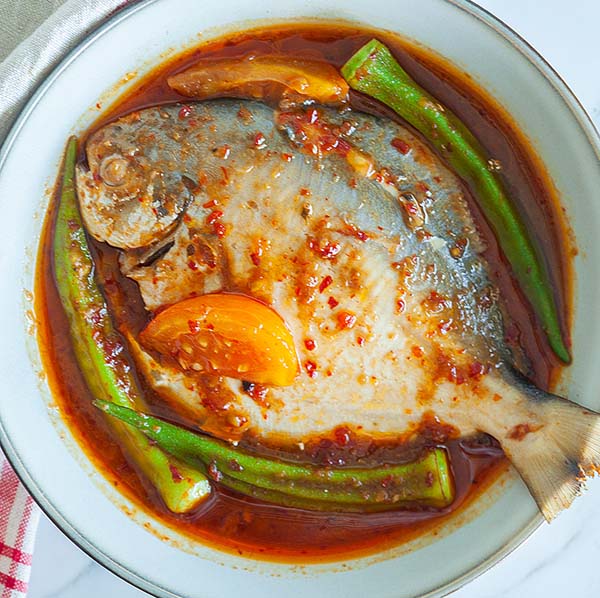
Assam Pedas Fish (Pomfret)Assam Pedas, or literally "sour spicy," is a classic Malaysian dish. Ask any home cooks in Malaysia--Malay, Chinese, or Indian--and you are bound to get various recipes for Assam Pedas. Everyone has their own interpretation for this favorite dish and there are endless adaptations; suffice it to say, it's sour, fiery hot, and tastes extraordinarily satisfying.

Assam Pedas Fish (Pomfret)When I made my sambal for nasi lemak last weekend, I made a point to prepare some extra spice paste for this Assam Pedas dish. While traditional Assam Pedas calls for ikan tenggiri (Spanish mackerel) or ikan pari (stingray), I used pomfret instead. (In the United States, even in California, it's almost impossible to find fish commonly found in Malaysia.) I love pomfret and it's a good substitute for Assam Pedas.

Much like nasi lemak, if you haven't tried Assam Pedas, it's very hard to describe just how wonderful this is. I hope my pictures and recipe do it justice.

Assam Pedas Fish (Pomfret)Recipe: Assam Pedas Pomfret

Ingredients:

1 pomfret (1/2 pound to 1 pound)
10 small okras
1 tomato (cut into wedges)
1 teaspoon of fish curry powder/turmeric powder
2 sprigs of daun kesum (Vietnamese mint/Vietnames coriander)
5 tablespoons of cooking oil
1 tablespoon of palm sugar/sugar
Salt to taste

Spice Paste:

1 clove garlic
1 stalk of lemon grass (white part only)
4 shallots
8-10 dried chillies (depends how spicy you like)
1/2 tablespoon of belacan (prawn paste)

Tamarind Juice

1 1/4 cup of water
Tamarind pulp (size of a small ping pong ball)

Method:
  1. Pound the spice paste with mortar and pestle or grind them in a food processor. Set aside.
  2. Soak the tamarind pulp in warm water for 15 minutes. Squeeze the tamarind pulp constantly to extract the flavor into the water. Drain the pulp and save the tamarind juice.
  3. Heat oil and fry the spice paste for 2 minutes or until fragrant.
  4. Add the tamarind juice, fish curry powder/turmeric powder and bring to boil.
  5. Add the tomato wedges and okras and bring to boil.
  6. Add the fish, salt, and palm sugar/sugar.
  7. Simmer on low heat for 5 minutes or until the fish is cooked.
  8. Serve hot.

Labels: , ,


Continue Reading "Recipe: Assam Pedas Fish"


October 29, 2006

Recipe: Nyonya Kuih Pie Tee / Top Hats

Nyonya Kuih Pie Tee / Top HatsGreat things do come in small packages--such is true when it comes to Nyonya Kuih Pie Tee. Alluringly gorgeous in presentation and rank high in the taste and flavor department, Nyonya Kuih Pai Tee are virtuous snacks that showcase clean flavors and brilliant combination of fresh ingredients--it's undeniably one of the most inventive and vividly luscious Nyonya creations.

Nyonya Kuih Pie Tee / Top HatsMaking Kuih Pie Tee is no small feat as it requires ample amount of patience and time. With its aesthetic so crisp, delicate, beautiful, the results are well worth the effort. The two-step process starts with the making of the cases or "top hats" with a metal mold, follow by the cooking of julienned jicama, carrot, and chopped shrimp. These ingredients are then assembled to form these eye candy treats.

Nyonya Kuih Pie Tee / Top HatsNyonya Kuih Pie Tee make a killer hor'deurves in any parties, be it a Malaysian party or an all-American schmooze fest. Everyone will marvel at the wow factor of these munchies.

Nyonya Kuih Pie Tee / Top Hats
Recipe:

Step 1: Top Hats Cases

1 metal mold
3 oz all purpose flour
1/2 teaspoon of rice flour
1 egg
1 cup of water (8 oz)
A pinch of salt
Oil for deep frying

Step 2: Filling

1 jicama, julienned
1 carrot, julienned
2 cloves garlic (chopped)
2 shallots (chopped)
6-8 shelled and deveined shrimp (chopped into small pieces)
Salt to taste
White pepper powder to taste
A dash of oyster sauce

Garnish:

Spring onion (finely chopped)

Pour all ingredients in step 1 into a bowl and beat with an electronic mixer. If you do not have an electronic mixer, whisk the batter until smooth. Heat oil in a wok with the mold in the oil. Do not overheat the mold. Dip the mold into the batter so it's evenly coated and then deep fry the batter. To remove the case from the mold while frying, jiggle the mold up and down. Once the case turns light brown, remove it from the wok and set aside.

To cook the filling, add some oil into a wok. Stir fry the chopped garlic and shallots until light brown. Add in shrimp, jicama, and carrot and season with salt, pepper, oyster sauce. Cook for 5 minutes.

To serve, fill the cases with the filling, garnish with spring onion, and serve with chili sauce.

Labels: ,


Continue Reading "Recipe: Nyonya Kuih Pie Tee / Top Hats"


October 01, 2006

Recipe: Steamed Eggs with Cincaluk

Steamed Eggs with CincalukBlamed it on either my Nyonya heritage or my own disturbingly distinct palate, but I have a penchant for what other people would classify as stinky foods. Stinky as in salted fish, Chinese cheese, belacan, and yes, fermented shrimp. My neighbors go out to eat when I prepare this last dish.

Locally known as Cincaluk, it usually comes packaged in a small glass bottle and can be purchased at markets throughout Malaysia. This delicacy is particularly popular in the Peranakan states of Melaka and Penang.

The main ingredient of Cincaluk is Geragau--little tiny shrimps found off the west coast of Malaysia. Fermented with salt, water, and sugar, Cincaluk is an acquired taste even to many Malaysians. Cincalok is commonly used to make Cincaluk Sambal with slices of shallots, bird's eye chilies, and lime juice. It's also used as flavoring for certain stir-fried Nyonya dishes.

Raw CincalukPersonally, I love my Cincaluk with steamed eggs. Adding just a couple spoonful of Cincaluk turns a plain and boring steamed egg into a savory dish, plus it only takes just a few ingredients and less than 10 minutes to whip up.

Steamed Eggs with CincalukMmmmm. The one downside being the pungent smell lingering in your kitchen after the meal. So consider yourself warned, and perhaps you should warn the neighbors too!

Steamed Eggs with CincalukIngredients:

2 eggs
2 bird's eye chilies (cut into small pieces)
1/2 onions (sliced)
1/3 cup of water
1 spoon cooking oil (lard preferred)
2 tablespoons of Cincaluk (use 2 teaspoons if you prefer a lighter flavor)

Beat the eggs in a small bowl. Add in all the ingredients above and mix well. Steam for 8 minutes and serve hot.

Labels: ,


Continue Reading "Recipe: Steamed Eggs with Cincaluk"


September 19, 2006

Eating Penang: Nyonya Kuih

Nyonya Kuih, Kuih Ko SuiWhile I had planned to share every single meal of my Penang culinary adventure with you, alas, my initiative and enthusiasm has been dampened by one unsurmontible obstacle: the painfully slow dial-up connection at my parents' home.

Nyonya Kuih, Rempah Udang Thus I am sharing my adventure with you in small tastes, i. e. a few pictures at a time -- sort of like stealing a bite from a friend's plate when they turn away.

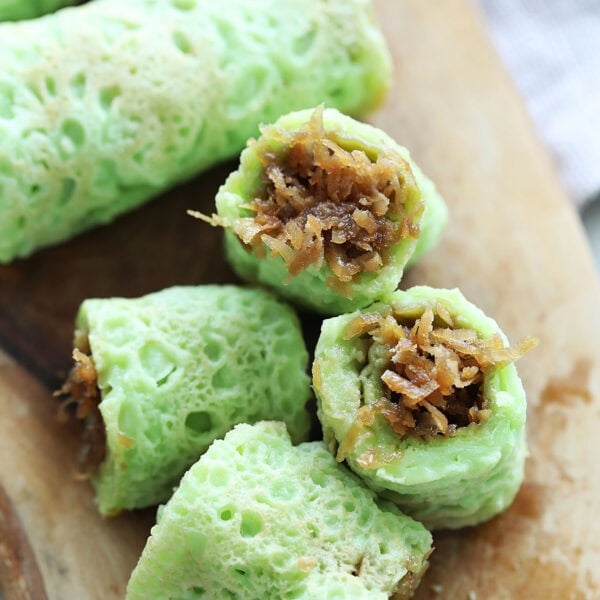
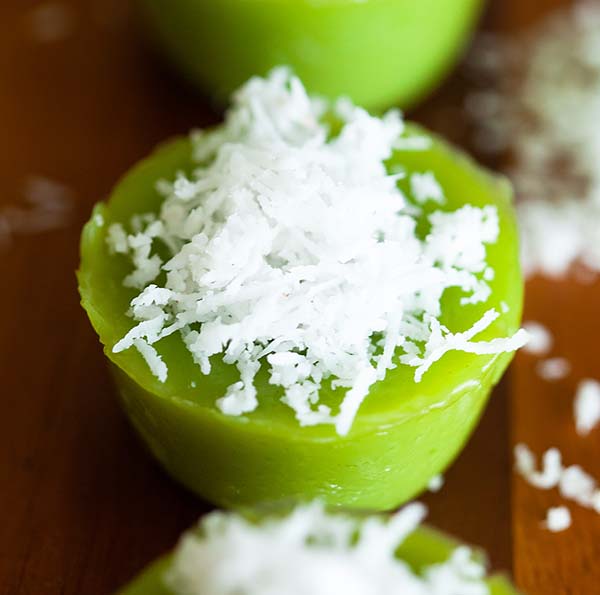
Kuih Beng KangThis morning I woke up craving for sugar so I headed straight to the morning market at Jelutong and got myself some beautiful, colorful, and tasty Nyonya Kuih and other small treats as breakfast. Total damage was approximately US$1.00 (US$1.00 = RM3.60).

Pulut Tai TaiLife is just sweet!

Pulut Tai TaiNote: Kuih Ko Sui, Rempah Udang, Kuih Beng Kang, Pulut Tai Tai, Pulut Inti, Choon Piah / Spring Rolls...

Pulut Tai Tai

Pictures of mouthwatering Penang hawker food:

- Photo Blog: Penang Hawker Food
- Photo Blog: Penang Hawker Food - Part II
- Eating Penang: A Quick Snapshot

Labels: , ,


Continue Reading "Eating Penang: Nyonya Kuih"


August 28, 2006

Merdeka Open House 2006: Kerabu Bee Hoon

They say that the sense of smell is most closely tied to that of memory, and preparing my late grandmother's recipe for Kerabu Bee Hoon with its aroma filling the kitchen certainly brought back a lot of wonderful memories for me.

It had been almost two decades since I last had Kerabu Bee Hoon. My grandmother used to prepare it when the family came over to her house for our traditional Sunday feast.

My grandmother was a Nyonya and probably one of the best cooks of her generation. She came from a place called Lunas - a small town in the State of Kedah - on the mainland of Peninsular Malaysia. She used to sell Nyonya Kuih in Lunas. I heard from many people that she was famous for her Kuih Talam, Kuih Ko Chee, Kuih Ko Sui, and Pulut Tai Tai. Whenever I went back with her to Lunas on festivals and occasions, her old friends and neighbors would come by to say hi and mention how they missed her and her cooking. They would go on forever raving how great her meals were. When we left she would always wear a sly, self-satisfied smile.

When she moved to Penang, preparing Kuih and Nyonya dishes became her favorite past-time. Growing up in her house, I was lucky enough to savor all her cooking. I remember vividly that she loved Kerabu Bee Hoon and naturally it became my favorite too. I always grew excited whenever she talked of preparing this dish.

As years passed by, Kerabu Bee Hoon slowly faded away in my culinary thoughts as I left Penang and settled down far away. Once in a while I would crave Kerabu Bee Hoon, but I never attempted to make it myself. At many of the places I lived, it wasn't easy to assemble the proper list of ingredients. Don't let that stop you from trying this recipe, Kerabu Bee Hoon is really not too difficult to prepare. I will warn you though, it is time consuming.

The motivation of cooking this dish surfaced after I read about "Merdeka Open House 2006" organized by Babe in the City. To many people in Malaysia, this is probably not a very special dish but it means a lot to me. It certainly qualifies as a long forgotten recipe in my gastronomic dictionary.

So, how did my version of Kerabu Bee Hoon turn out? Well, I have to admit that it was a far cry from my late grandmother's version. However, cooking it once more brought back the sweet memories of my almost forgotten past. And that's what made it taste special.

Ingredients:
  • 1/2 pack of Bee Hoon (vermicelli)
  • 10-12 shrimps (shelled, deveined, and then boiled in hot water)
  • 1 shallot (thinly sliced)
  • 1 stalk of lemon grass - white part only (thinly sliced)
  • 5 kaffir lime leaves (finely sliced)
  • 1/2 cup of grated coconut

Blend the following in a blender:
  • 1 teaspoon of toasted belacan (shrimp paste)
  • A handful of dried prawns (soaked in hot water for 10 minutes)
  • 6 red chilies
  • 5 teaspoon of lime juice
  • 1 teaspoon of fish sauce
  • Sugar to taste
Boil the Bee Hoon in hot water, drain, and set aside. Toast the grated coconut in a wok until they turn dry and golden brown in color. Combine the toasted coconut, shallot, lemon grass, kaffir lime leaves, boiled shrimps, Bee Hoon, and the blended chili paste in a large serving plate. Toss and mix all the ingredients well. Serve cold.

Selamat Hari Merdeka!

Labels: ,


Continue Reading "Merdeka Open House 2006: Kerabu Bee Hoon"